.png)
How Cannabis Interacts With the Human Body: From Immune Support to Whole Body Relief
January 27, 2026
#JFK Cannabis #Queens cannabis dispensary #cannabis near JFK Airport #NYC cannabis education #New York recreational cannabis #cannabis wellness Queens NY #legal cannabis NYC
How Cannabis Interacts With the Human Body: From Immune Support to Whole Body Relief
Cannabis isn’t just about relaxing vibes and good music it’s a complex plant packed with compounds that interact with nearly every system in the human body. Thanks to cannabinoids like CBD, THC, CBG, and CBC, cannabis works with your body’s natural regulatory network (the endocannabinoid system) to help maintain balance, comfort, and overall wellness.
This educational guide explains how cannabis interacts with the human body, including the nervous system, immune response, muscles, digestion, and the endocannabinoid system.
Let’s break down how cannabis may support different parts of the body in simple, real world terms.
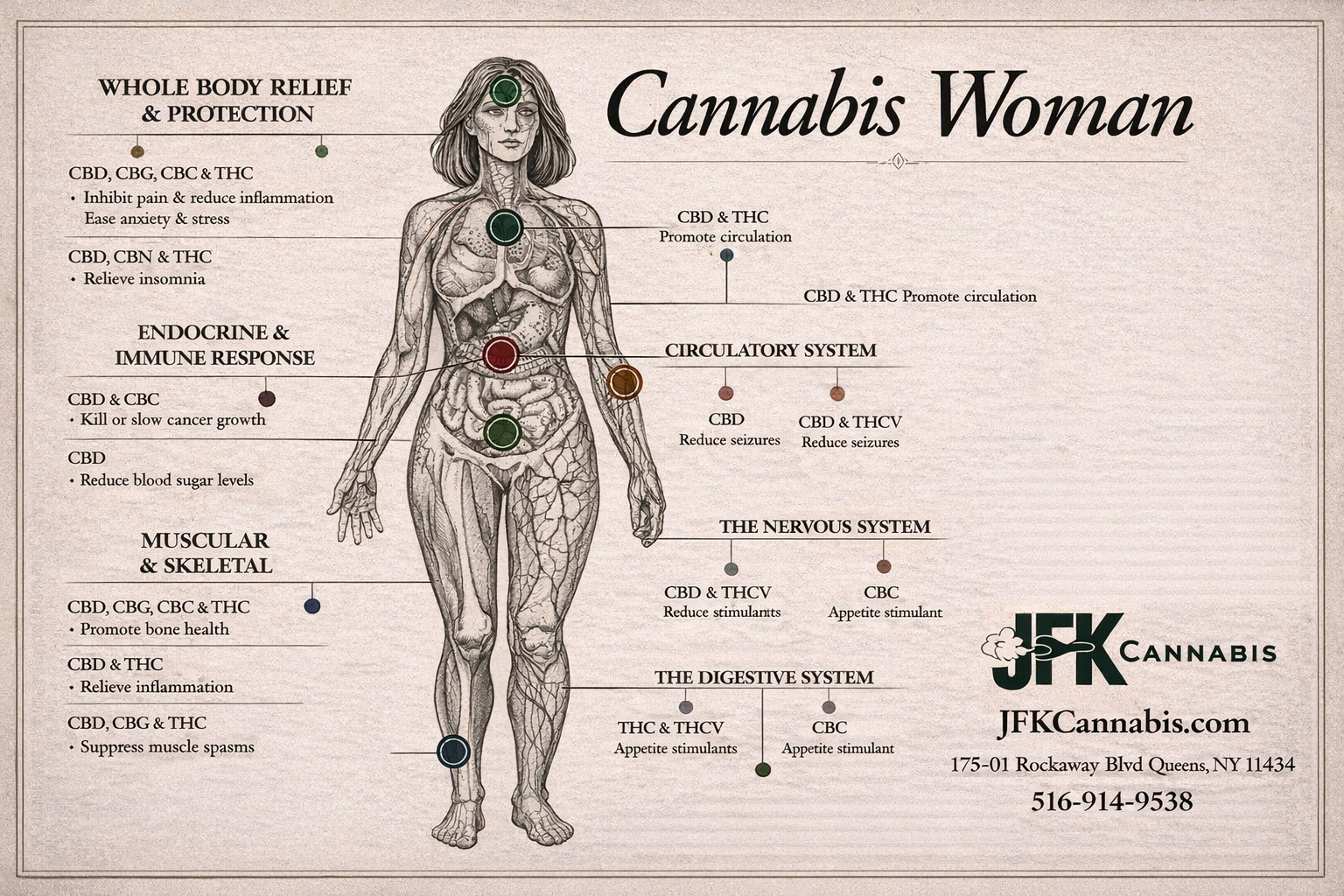
Whole Body Relief & Protection
One of the biggest reasons people turn to cannabis is its full-body effects. Cannabinoids interact with receptors found throughout your brain, organs, muscles, and tissues.
Many customers report back with an update on the cannabis and what it may help support:
• Physical comfort and tension relief
• Stress reduction and relaxation
• Rest and sleep quality
• Mood balance
• Recovery after activity
Compounds like CBD, CBG, CBC, and THC are commonly associated with soothing inflammation responses, calming the nervous system, and helping the body relax after a long day.
Think of cannabis as a “system balancer” helping your body settle into a more comfortable rhythm.
Endocrine & Immune Response Support
Your endocrine system controls hormones that regulate energy, mood, appetite, and metabolism. Meanwhile, your immune system protects your body from outside stressors.
Cannabinoids interact with receptors tied to both systems and may help:
• Support immune balance
• Assist with inflammatory response regulation
• Help manage stress hormones
• Promote internal stability (homeostasis)
CBD and CBG are especially known for their calming and balancing properties, making them popular among people seeking daily wellness support without intense psychoactive effects.
Circulatory System Support
Your circulatory system is responsible for moving oxygen, nutrients, and blood throughout your body. Cannabis compounds interact with receptors found in blood vessels and cardiovascular tissue.
Some customers report that cannabinoids may support:
• Healthy blood flow
• Circulation balance
• Relaxation of tension related to stress
• Overall cardiovascular comfort
CBD is often associated with calming physical stress responses, while THC can promote relaxation effects that many users describe as “full body calm”.
Nervous System Interaction
Your nervous system controls everything from movement and sensation to mood and sleep. Cannabinoids interact directly with receptors in the brain and spinal cord.
Cannabis may help support:
• Mental relaxation
• Stress reduction
• Sleep support
• Neurological comfort
• Calm focus (depending on strain type)
Different cannabinoids affect the nervous system in different ways. For example:
• CBD is often associated with calm and balance
• THC can create euphoric or deeply relaxing effects
• THCV is sometimes described as mentally stimulating in smaller doses
This is why strain choice and cannabinoid profile matter so much.
Muscular & Skeletal Support
After workouts, long shifts, or daily physical activity, your muscles and joints take the hit. Cannabis has become popular among people looking for natural recovery support.
Cannabinoids may help support:
• Muscle relaxation
• Post-activity recovery
• Physical comfort
• Joint flexibility
• Tension release
CBD, CBG, and THC are commonly associated with body-focused effects that many users find helpful after physically demanding days.
Digestive System & Appetite Support
Your digestive system also contains cannabinoid receptors. This is why cannabis can influence appetite and gut comfort.
Some cannabinoids are associated with:
• Appetite stimulation
• Digestive balance
• Nausea management
• Comfort after meals
THC and THCV are especially well-known for interacting with appetite signals, which is why cannabis has historically been associated with “the munchies.”
The Power of the Entourage Effect
Cannabis works best when its compounds work together with a concept called the entourage effect.
This means cannabinoids, terpenes, and flavonoids interact synergistically to create more balanced and nuanced effects than any single compound alone.
For example:
• Myrcene is associated with relaxing effects
• Limonene is known for uplifting vibes
• Caryophyllene interacts with inflammation-related receptors
• Linalool is associated with calming sensations
Together, they shape how a strain feels in your body and mind.
⚖️ Everyone’s Experience Is Unique
It’s important to remember: cannabis affects everyone differently.
Factors that influence your experience include:
• Body chemistry
• Tolerance level
• Strain type
• Cannabinoid ratios
• Terpene profile
• Consumption method
• Dosage
What feels relaxing to one person may feel energizing to another that’s part of the beauty of personalized cannabis wellness.
Final Thoughts on Cannabis as a Wellness Tool
Cannabis isn’t a “one-size-fits-all” solution but when used responsibly, many adults incorporate it into their wellness routines for balance, relaxation, recovery, and everyday comfort.
From immune and nervous system interaction to muscle relaxation and digestive support, cannabis continues to be studied for its broad range of effects on the human body.
As always, start low, go slow, and choose products that match your personal goals. Learn more and plan your next visit at JFK Cannabis. Near JFK Airport. Queens, New York.
Cannabis isn’t just about relaxing vibes and good music it’s a complex plant packed with compounds that interact with nearly every system in the human body. Thanks to cannabinoids like CBD, THC, CBG, and CBC, cannabis works with your body’s natural regulatory network (the endocannabinoid system) to help maintain balance, comfort, and overall wellness.
This educational guide explains how cannabis interacts with the human body, including the nervous system, immune response, muscles, digestion, and the endocannabinoid system.
Let’s break down how cannabis may support different parts of the body in simple, real world terms.
Whole Body Relief & Protection
One of the biggest reasons people turn to cannabis is its full-body effects. Cannabinoids interact with receptors found throughout your brain, organs, muscles, and tissues.
Many customers report back with an update on the cannabis and what it may help support:
• Physical comfort and tension relief
• Stress reduction and relaxation
• Rest and sleep quality
• Mood balance
• Recovery after activity
Compounds like CBD, CBG, CBC, and THC are commonly associated with soothing inflammation responses, calming the nervous system, and helping the body relax after a long day.
Think of cannabis as a “system balancer” helping your body settle into a more comfortable rhythm.
Endocrine & Immune Response Support
Your endocrine system controls hormones that regulate energy, mood, appetite, and metabolism. Meanwhile, your immune system protects your body from outside stressors.
Cannabinoids interact with receptors tied to both systems and may help:
• Support immune balance
• Assist with inflammatory response regulation
• Help manage stress hormones
• Promote internal stability (homeostasis)
CBD and CBG are especially known for their calming and balancing properties, making them popular among people seeking daily wellness support without intense psychoactive effects.
Circulatory System Support
Your circulatory system is responsible for moving oxygen, nutrients, and blood throughout your body. Cannabis compounds interact with receptors found in blood vessels and cardiovascular tissue.
Some customers report that cannabinoids may support:
• Healthy blood flow
• Circulation balance
• Relaxation of tension related to stress
• Overall cardiovascular comfort
CBD is often associated with calming physical stress responses, while THC can promote relaxation effects that many users describe as “full body calm”.
Nervous System Interaction
Your nervous system controls everything from movement and sensation to mood and sleep. Cannabinoids interact directly with receptors in the brain and spinal cord.
Cannabis may help support:
• Mental relaxation
• Stress reduction
• Sleep support
• Neurological comfort
• Calm focus (depending on strain type)
Different cannabinoids affect the nervous system in different ways. For example:
• CBD is often associated with calm and balance
• THC can create euphoric or deeply relaxing effects
• THCV is sometimes described as mentally stimulating in smaller doses
This is why strain choice and cannabinoid profile matter so much.
Muscular & Skeletal Support
After workouts, long shifts, or daily physical activity, your muscles and joints take the hit. Cannabis has become popular among people looking for natural recovery support.
Cannabinoids may help support:
• Muscle relaxation
• Post-activity recovery
• Physical comfort
• Joint flexibility
• Tension release
CBD, CBG, and THC are commonly associated with body-focused effects that many users find helpful after physically demanding days.
Digestive System & Appetite Support
Your digestive system also contains cannabinoid receptors. This is why cannabis can influence appetite and gut comfort.
Some cannabinoids are associated with:
• Appetite stimulation
• Digestive balance
• Nausea management
• Comfort after meals
THC and THCV are especially well-known for interacting with appetite signals, which is why cannabis has historically been associated with “the munchies.”
The Power of the Entourage Effect
Cannabis works best when its compounds work together with a concept called the entourage effect.
This means cannabinoids, terpenes, and flavonoids interact synergistically to create more balanced and nuanced effects than any single compound alone.
For example:
• Myrcene is associated with relaxing effects
• Limonene is known for uplifting vibes
• Caryophyllene interacts with inflammation-related receptors
• Linalool is associated with calming sensations
Together, they shape how a strain feels in your body and mind.
⚖️ Everyone’s Experience Is Unique
It’s important to remember: cannabis affects everyone differently.
Factors that influence your experience include:
• Body chemistry
• Tolerance level
• Strain type
• Cannabinoid ratios
• Terpene profile
• Consumption method
• Dosage
What feels relaxing to one person may feel energizing to another that’s part of the beauty of personalized cannabis wellness.
Final Thoughts on Cannabis as a Wellness Tool
Cannabis isn’t a “one-size-fits-all” solution but when used responsibly, many adults incorporate it into their wellness routines for balance, relaxation, recovery, and everyday comfort.
From immune and nervous system interaction to muscle relaxation and digestive support, cannabis continues to be studied for its broad range of effects on the human body.
As always, start low, go slow, and choose products that match your personal goals. Learn more and plan your next visit at JFK Cannabis. Near JFK Airport. Queens, New York.